

M.A.T. by 3DCeram: One machine, three extrusion technologies—the future of ceramic 3D printing
Anyone involved in the additive manufacturing of technical ceramics is familiar with the problem: Depending on the component, material, and production volume, different processes—and thus different machines—are often required. 3DCeram addresses this problem with a new platform: the M.A.T., short for Multi-Additive Technology. The machine combines multiple extrusion processes in a single unit, marking a leap from simple plastic printers to true tools for engineering ceramics and metals.
From Hobby 3D Printing to Technical Ceramics
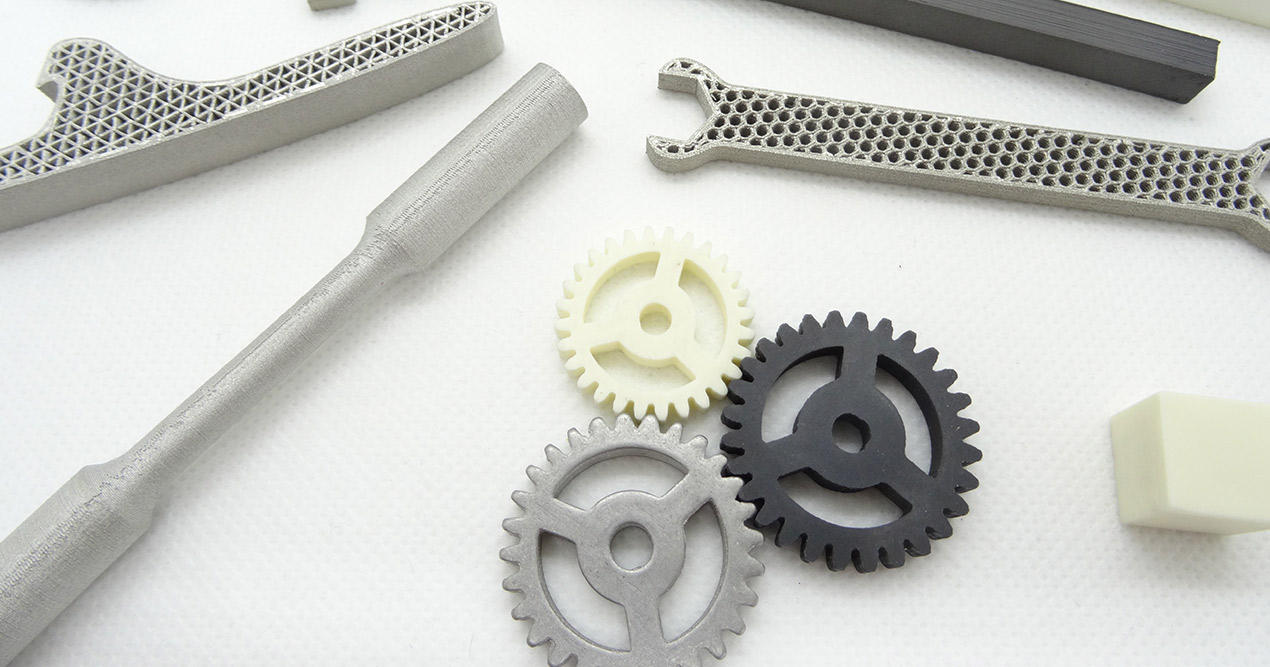
Fused Filament Fabrication (FFF) is familiar to many in the field, where it is used to print with materials such as PLA, ABS, and others. 3DCeram has consistently refined this principle and adapted it for use with engineering materials. With the M.A.T., it is now possible to print sophisticated ceramics such as silicon carbide, aluminum oxide, or tungsten carbide—materials that are in high demand in industry due to their hardness, heat resistance, and chemical stability.
One machine, three print heads—plus post-processing
The M.A.T.’s key feature is its flexibility. Instead of being limited to a single process, the machine offers three different extrusion heads that can be swapped out or retrofitted depending on the application:
- FFF print head: This process uses specially manufactured ceramic or metal filaments, which are precisely shaped by a water-cooled print head. After printing, the typical steps of ceramic manufacturing follow: debinding and subsequent sintering, during which the ceramic powder is compacted. Optionally, the printed “green” component can first be chemically treated with acetone to accelerate the heat treatment.
- Pellet-based printing: Instead of filaments, this method uses injection-molding pellets or granules directly—an approach that is particularly useful for prototyping ceramics and metals. The advantages include lower material costs and the ability to remove water through de-binding.
- Paste extrusion (Robocasting): This process, also known as Direct Ink Jet, extrudes ceramic pastes through a nozzle. The heated print head and integrated mixer blend the paste in real time and process it directly during the printing process. This has a practical side effect: debinding and sintering can be performed in a single furnace cycle. 3DCeram offers print heads for both single-component and two-component pastes.

The system is supplemented by a three-axis CNC tool that can machine printed components while they are still in their “green” state—that is, before sintering. This process is known as CNC green machining. This significantly improves surface quality, which directly affects the mechanical properties of the finished part. Since machining takes place on the same machine, it saves time and costs that would otherwise be incurred for the significantly more complex hard machining of sintered parts. What’s particularly clever: Machining can also take place between individual printing steps—that is, print a few layers, machine them, and continue printing.

Key Technical Specifications
For those interested in the practical details, here are the key specifications of the M.A.T.:
- Printer Type: Material Extrusion
- Dimensions: 60 x 60 x 115 cm (W x D x H)
- Printing dimensions: 20 x 20 x 20 cm
- Machine weight: approx. 90 kg
- Power supply: 230 V, 16 A, 50 Hz
- Drive: Closed-loop stepper motors
- Heated pressure chamber: up to 60 °C
- Heated filament chamber: up to 50 °C
In terms of materials, the machine can process both ceramics (silicon carbide, aluminum oxide, zirconia) and metals ( titanium Ti6Al4V, stainless steel 316L and 17-4PH, copper).
Who would benefit from the M.A.T.?
The combination of three extrusion technologies and integrated post-processing makes the M.A.T. particularly appealing to users who value flexibility—such as research institutions that want to test different materials and processes, or manufacturers seeking to produce complex ceramic parts as prototypes. Instead of having to purchase multiple specialized machines, the M.A.T. allows a wide range of applications to be covered with a single system.
With this, 3DCeram clearly positions itself as a provider that does not rely on a single process, but instead takes a comprehensive, one-stop approach to the entire additive manufacturing process for technical ceramics—from material selection to post-processing.
Would you like to learn more about the potential of ceramic 3D printing or M.A.T.? If so, feel free to contact us here.

Wejdane Ezzine
Sales Engineer, 3DCeram
+49 172 7 660 451
wejdane.ezzine@am-pioneers.com