

Binder Jetting in Medical Technology: New Possibilities for Implants and Surgical Instruments
Additive manufacturing has fundamentally transformed the medical technology sector in recent years. While many applications today rely on laser-based processes such as SLM or LPBF, another technology is gaining increasing prominence: Metal Binder Jetting.
This process is particularly effective when high production volumes, complex geometries, and cost-effective manufacturing are required. From surgical instruments and implants to innovative research projects, Binder Jetting opens up new possibilities for medical technology.
Medical Technology from the Black Forest: Manufacturing in Compliance with ISO 13485
Max Power Live Sciences, a company based in the Black Forest, provides an example of industrial application. The company manufactures surgical instruments and implants in accordance with the ISO 13485 medical device standard using the binder jetting process.
The following materials are primarily used:
- 316L Stainless Steel
- 17-4 PH Stainless Steel
Both materials offer excellent mechanical properties and are suitable for demanding applications in the medical field.
Implantate mit optimierter Oberflächenstruktur
Binder jetting offers particularly great potential in the field of medical implants.
The use of lattice and network structures allows implants to be optimized in a targeted manner:
- Weight reduction
- Improved mechanical properties
- Promotion of bone growth
- Optimized healing
The increased surface area of such structures promotes what is known as osseointegration—that is, the fusion of the implant with the surrounding bone.
This creates a stable bond between the implant and the body’s tissues.
316L as a cost-effective alternative to titanium
When people talk about implants, titanium is usually the first material that comes to mind. However, 316L stainless steel also offers some interesting advantages.
This material combines:
- High biocompatibility
- Excellent corrosion resistance
- High strength
- Good workability
While titanium offers advantages in terms of weight, 316L is significantly more cost-effective. Combined with the design flexibility of additive manufacturing, this creates an economically attractive alternative for select implant applications, such as hip implants.
Binder jetting can significantly reduce manufacturing costs, particularly for complex geometries or patient-specific solutions.

Surgical Instruments: Flexibility Instead of Tool Costs
Binder jetting also offers significant advantages when it comes to surgical instruments.
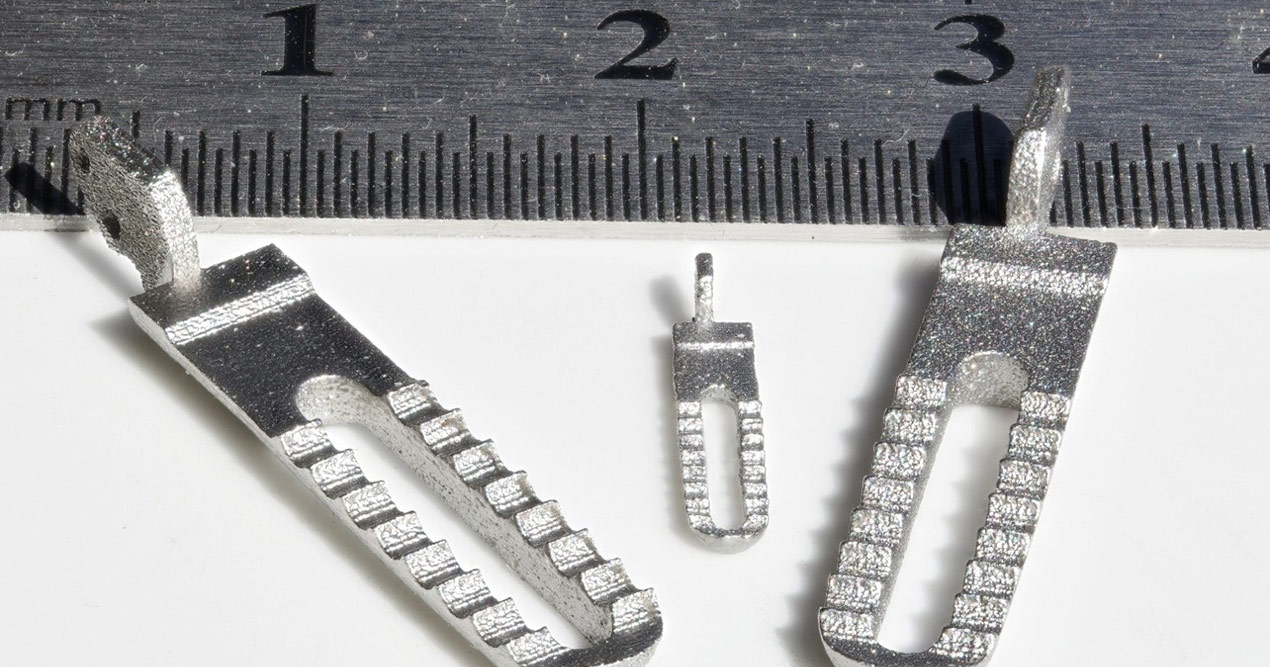
One example is the so-called “mouth forceps” used for minimally invasive procedures.
Traditionally, these components are manufactured using CNC machining. Due to rising cost pressures, many manufacturers are now turning to metal injection molding (MIM).
MIM and binder jetting are based on similar material and sintering processes. The key difference is that binder jetting does not require a mold.
As a result, this method is particularly well-suited for:
- Small and medium production runs
- Wide variety of variants
- Frequent design changes
- Rapid product adjustments
In addition, local manufacturing is becoming increasingly important. Many suppliers of medical components are located in the Far East. At the same time, geopolitical developments and rising demand from other industries are limiting production capacity.
Binder jetting offers the opportunity to shorten supply chains and increase supply security.

Max Power Live Sciences relies on the Desktop Metal Shop System to manufacture implants and medical instruments. The binder jetting system enables scalable production of complex metal parts.

Research Project: Biodegradable Molybdenum Implants
A research project at Offenburg University of Applied Sciences demonstrates just how great the potential of this technology is.
Molybdenum implants are currently being studied there. The material is considered a promising alternative for future bone implants.
Molybdenum has several interesting properties:
- Biodegradability
- High strength
- Promotes bone growth
The researchers are studying delicate gyroid structures with wall thicknesses of up to 125 micrometers. Such geometries are virtually impossible to produce using conventional manufacturing methods.
Applications in the Dental Field
The research focuses in particular on applications in dentistry.
If teeth are missing for an extended period of time, the jawbone in the affected areas begins to resorb. If a dental implant is to be placed later, there must first be sufficient bone material available.
In the future, additively manufactured molybdenum implants could be used for this purpose.
In collaboration with the University Medical Center Freiburg, researchers are investigating how such structures can be used to rebuild jawbone. The goal is to specifically support bone regeneration and thereby create the conditions necessary for future dental implant procedures.

Offenburg University of Applied Sciences relies on the Desktop Metal InnoventX system for the material development of molybdenum alloys for medical implants

Conclusion: Binder Jetting as a Key Technology in Medical Technology
Metal Binder Jetting is increasingly becoming an important manufacturing technology for the medical technology sector. The process enables the cost-effective production of complex geometries, reduces reliance on tools, and opens up entirely new possibilities in the design of medical products.
Whether surgical instruments, bone plates, patient-specific implants, or biodegradable structures for regenerative medicine—the combination of design freedom, productivity, and material diversity makes Binder Jetting one of the most exciting technologies for the next generation of medical products.
Would you like to learn more about binder jetting in medical technology?
Then please feel free to contact us—we’ll be happy to advise you personally.

Frederik Nussbaumer
Head of Sales
+49 172 4059105
frederik.nussbaumer@am-pioneers.com