

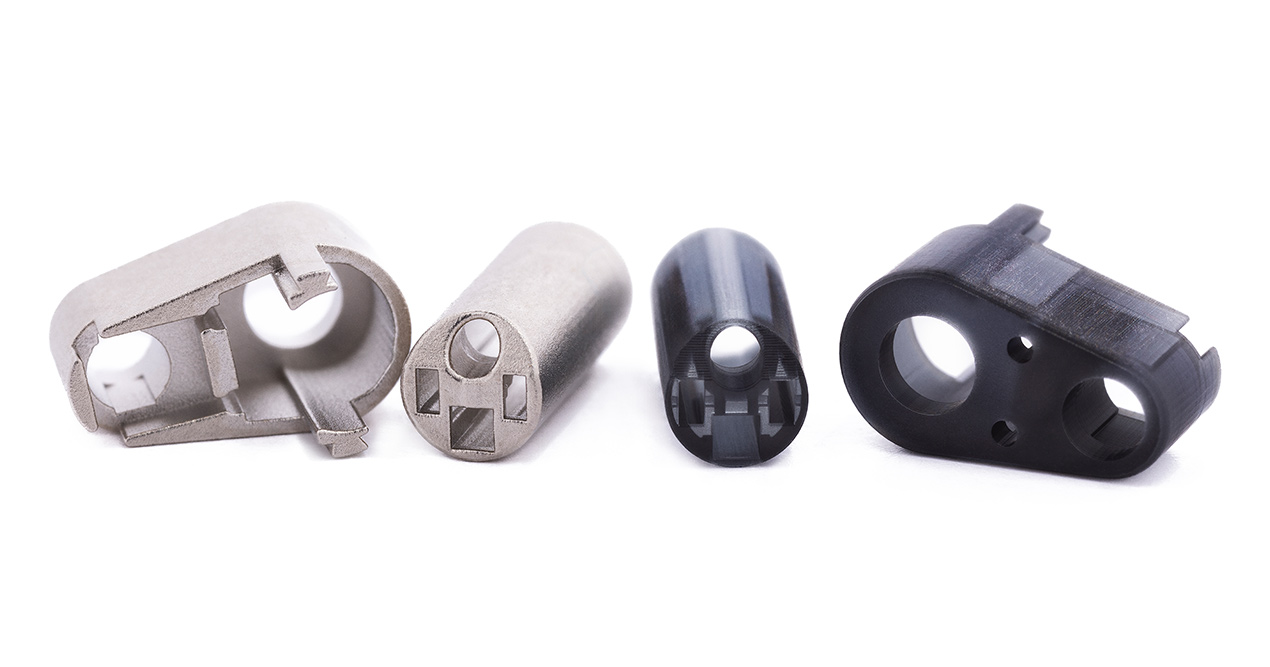
Micro 3D Printing for Medical Devices: Why Micrometer-Level Accuracy Is Critical to Functionality
In medical technology, accuracy is not an optional feature. It is a fundamental regulatory and functional requirement. A component that deviates from its dimensional specifications by even a few hundred micrometers can compromise a device’s performance, endanger patient safety, or result in costly rework during the development process. For a long time, conventional manufacturing processes were unable to reliably deliver the combination of geometric complexity and micrometer-level precision that modern medical devices increasingly demand.
Micro 3D printing is fundamentally changing this situation.
Why Accuracy Is So Critical in Medical Technology
Medical components are becoming smaller and, at the same time, more complex. Microneedle arrays for transdermal drug delivery, microfluidic diagnostic chips, catheter components, housings for implantable sensors, and mechanisms for controlled drug release require structures that push the physical limits of conventional machining and molding processes.
The challenge lies not only in producing small structural dimensions. It is crucial to consistently maintain these dimensions across multiple production runs while using materials that meet biocompatibility requirements.

Conventional 3D printing methods such as standard DLP, FDM, and SLA typically achieve XY resolutions in the range of 50 to 150 µm with tolerances of ±100 to ±200 µm. This may be sufficient for general-purpose prototypes. For medical devices, however, it is not sufficient. A deviation of 50 µm in the diameter of a microneedle tip affects the penetration depth and thus the diffusion of the active ingredient. A deviation of 30 µm in the width of a microfluidic channel alters the flow dynamics and thus the sensitivity of the diagnostic assay. In the micrometer range, every deviation is functionally significant.
What Boston Micro Fabrication’s micro 3D printing achieves
The PµSL (Projection Micro Stereolithography) technology developed by Boston Micro Fabrication operates at a fundamentally different level of precision than conventional additive manufacturing processes.
The microArch platform from Boston Micro Fabrication achieves XY resolutions of up to 2 µm with layer thicknesses starting at 10 µm and tolerances of ±10 µm. To put that in perspective: A human hair has a diameter of about 70 µm. Boston Micro Fabrication’s micro 3D printing routinely produces structures that are 35 times smaller.
This level of precision takes on clinical significance in specific device categories. In microneedle arrays for transdermal drug delivery, the geometry of the tips directly influences the penetration depth into the skin and the diffusion rate of the active ingredient. In microfluidic diagnostic platforms, the accuracy of the channel cross-section determines the flow rate and the sensitivity of the assay. In housings for implantable sensors, dimensional accuracy affects the hermetic sealing performance.
In each of these cases, the difference between a tolerance of ±10 µm and ±100 µm is not merely theoretical. It is the difference between a device that functions as intended and one that does not.
Repeatable Accuracy: Calibration and Process Control
Achieving high resolution in a single print is one thing. Maintaining that resolution consistently across multiple print runs, machines, and material batches is another. This is precisely where many additive manufacturing platforms fall short in regulated environments.
Boston Micro Fabrication’s microArch platform ensures precision through a combination of optical calibration, the accuracy of the build platform, and controlled exposure parameters. In the PµSL process, an entire layer is projected simultaneously rather than being scanned point by point. This prevents cumulative positioning errors that frequently occur in laser-based systems. At set intervals, optical calibration routines check for and correct any deviations in the projection system. In this way, Boston Micro Fabrication ensures that dimensional accuracy is maintained not only for individual prototype components but across all production runs.
For medical technology engineers working within quality management systems—whether in ISO 13485-compliant development processes or IQ/OQ/PQ validation frameworks—this repeatability is just as important as the initial accuracy specification. A tolerance of ±10 µm maintained across 50 production runs is far more valuable than one that applies only to a single demonstration print.
Biocompatible Materials for Micro 3D Printing
Accuracy at the micrometer scale is inextricably linked to material behavior. Photopolymers shrink during curing, and unless this shrinkage is properly characterized and compensated for, it directly leads to dimensional errors. At the micrometer scale, even minor differences in material behavior between different batches can have measurable effects on the dimensions of the finished components.
Boston Micro Fabrication offers several materials that are particularly relevant for medical technology applications:
BIO Resin is a biocompatible photopolymer that has passed the ISO biocompatibility test with a cell culture survival rate of 93.3% in vitro. It is suitable for non-implantable medical applications and is sterilizable.
BMF MED Resin, developed in collaboration with 3D Systems, is a rigid, amber-colored material with a heat resistance exceeding 100 °C and a cell culture survival rate of 95.6%. It was designed for applications that require sterilizability.
HTL Resin offers high temperature resistance (HDT: 152 °C) combined with biocompatibility, making it suitable for applications involving high-pressure steam sterilization, such as autoclaving.
Each of these materials is optimized for micro 3D printing on the microArch platform. Shrinkage compensation is already built into the print parameters. This means that dimensional accuracy is achieved using the actual materials from which the final device will be manufactured, rather than just a reference resin.
Optical Precision for Diagnostic Applications
Boston Micro Fabrication’s CLEAR Resin plays a key role in microfluidic diagnostic devices and lab-on-a-chip platforms that require optical inspection and visualization of fluid flows. With a light transmittance of over 90% at layer thicknesses of 10 µm and without the need for post-processing, the material enables the prototyping and validation of transparent channels and chambers on a microscale. Micro 3D printing delivers the same dimensional accuracy as with opaque materials.

This is particularly valuable in the development of diagnostic devices, where verifying fluid behavior in the manufactured channels is a critical validation step before production tools are approved.
From Prototype to Validation: Why Micro 3D Printing Shortens Development Cycles
One of the key advantages of micro 3D printing in medical device development is the ability to drastically shorten iteration cycles in the design process. When even a single prototype delivers components with production-grade tolerances and appropriate material properties, the data obtained during the prototyping phase is meaningful for validation purposes and should not be viewed merely as a rough guide.
Engineers developing microneedle arrays can test actual penetration performance using prototypes with the planned geometry. Teams developing microfluidic assays can validate flow dynamics in printed channels before investing in PDMS molding or injection molding tools. Surgical instrument development teams can functionally test components with the same total tolerances as those that will occur later in production.
This shortening of the cycle from prototype to validation is becoming increasingly important as development times for medical devices continue to shrink and the costs of design changes in late phases rise.
Design Guidelines for Micro 3D Printing of Medical Components
Engineers working with micro 3D printing for the first time should be aware of certain design considerations that differ from conventional additive manufacturing.
The minimum dimensions on Boston Micro Fabrication’s microArch platform are a wall thickness of approximately 20 to 50 µm and 10 µm for vertical holes. When designing at or near these limits, special attention should be paid to the orientation of the structures and the support strategy. For internal channels, a design focused on drainage is recommended to prevent uncured resin from becoming trapped in closed geometries. The surface finish of downward-facing surfaces differs from that of upward-facing surfaces and should be taken into account when defining critical interfaces. The choice of material should be confirmed early in the design process, as different biocompatible resins have varying mechanical and thermal properties that affect both the printing parameters and the performance of the finished component.
The application engineering team at Boston Micro Fabrication works directly with medical device development teams to optimize designs for micro 3D printing with PµSL. This support is particularly valuable for engineers who do not yet have experience with additive manufacturing at the micro scale.
Conclusion
Micro 3D printing fills a real gap in the medical device development toolkit: the ability to produce geometrically complex components on a microscale with production-grade tolerances from biocompatible materials at the speed of additive manufacturing.
For engineers evaluating this technology, the three key questions are: Do the achievable tolerances meet the requirements of my product? Does the material’s biocompatibility meet the intended use? And does the platform deliver consistent accuracy across all production runs, not just during the characterization of individual samples?
Boston Micro Fabrication answers all three questions with the microArch platform and micro 3D printing using PµSL technology. The result is a significant advancement over both conventional 3D printing and traditional microfabrication processes.
Would you like to learn more about micro 3D printing in medical technology? We’ll help you find the right solution. Contact us for a consultation.

Erik Nitsche
Sales Engineer BMF
+49 162 764 2630
erik.nitsche@am-pioneers.com